
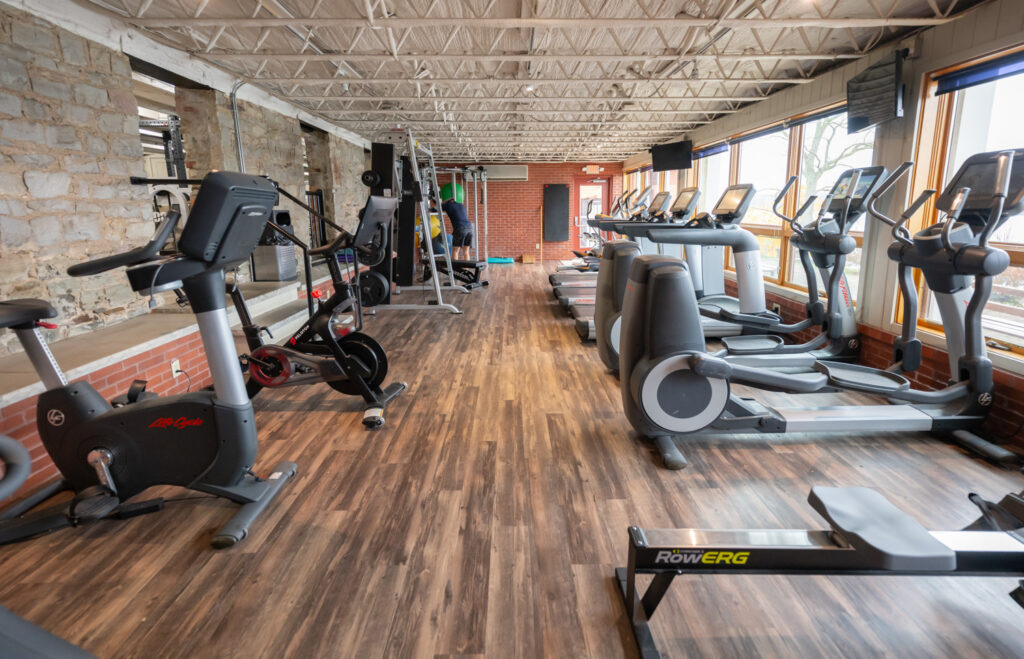
Your shift ends at 11pm. Or 2am. Or 6am. By the time you’re ready to train, most gyms are locked, closing, or so dead you feel like you’re trespassing. Sound familiar?
If you work nights at Seneca Niagara Casino, pull 12-hour shifts at a hospital, or clock out of a factory after midnight, you already know the standard fitness advice doesn’t apply to you. “Just wake up early and work out before work” isn’t helpful when your “morning” is someone else’s 3pm. You need a late night gym in Niagara Falls that actually works with your schedule, not against it.
This guide breaks down what’s actually available, what to look for, and which options make sense for people whose lives don’t run 9-5.
Why Shift Workers Need a Different Kind of Gym
The fitness industry is built for people with traditional schedules. Most gyms open at 5am, close between 9-11pm, and assume you can squeeze in a workout during “normal” waking hours. That model completely ignores the reality of shift work, and roughly 20% of American workers (about 32 million people) work non-traditional schedules, according to Bureau of Labor Statistics data. In tourism and hospitality-heavy areas like Niagara Falls, that percentage climbs even higher.
Here’s what we hear from shift workers who train at Apex: the biggest barrier isn’t motivation, it’s access. You want to train. You’re willing to put in the work. But when your shift ends at midnight and the closest gym closed an hour ago, motivation doesn’t matter. You either drive 30 minutes to find something open, skip the workout entirely, or try to force yourself awake at a time that wrecks your sleep schedule.
And the “just adjust your schedule” advice? It misses the point entirely. Chronobiology research shows that shift workers who train during their natural waking hours, typically 1-4 hours after waking, see up to 25% better sleep quality compared to those who force traditional workout times. Exercising when your body expects to be asleep elevates fatigue and disrupts recovery. The better approach is training when your body is actually awake and ready, which for night shift workers often means late night or early morning hours that most gyms simply don’t accommodate.
The issue isn’t discipline. It’s that most fitness options weren’t designed with your life in mind.
What “Late Night Gym” Actually Means (And What to Look For)
When evaluating late night gyms, look for five things: true 24/7 access with no “maintenance closures,” self-entry systems that don’t require staff presence, well-lit and secure facilities, consistently low crowd levels during off-hours, and flexible membership terms that adapt to changing shift patterns.
That list matters because “extended hours” and “24/7” are not the same thing. Over 70% of gyms that advertise “24-hour access” impose overnight maintenance closures, typically between midnight and 5am, according to industry data. A gym that’s open until 11pm doesn’t help you if your shift ends at 11:30. A gym that advertises 24-hour access but closes for cleaning from 2-4am defeats the purpose. And a gym that’s technically open but completely unstaffed, poorly lit, and feels sketchy at night creates its own set of problems.
Here’s what to actually ask before joining:
Does the gym have true 24/7 access, or are there overnight closures for maintenance? Some “24-hour” gyms close for several hours in the middle of the night for cleaning. That 2-5am window might be exactly when you need to train.
How does entry work after hours? Self-entry with a key fob or app-based access means you’re not dependent on staff schedules. If the gym requires someone to be physically present to let you in, that’s a red flag for reliability.
What’s the crowd situation at night? A gym that’s packed at 6pm and empty at midnight might sound appealing, until you realize “empty” means you’re alone in a building at 2am with no staff and questionable security. The ideal is a facility designed for low-volume membership where off-hours still feel normal, not abandoned.
Is the facility actually maintained during off-hours? Equipment breaks, lights go out, bathrooms need restocking. Gyms that prioritize daytime members often let overnight conditions slide. Ask about their maintenance schedule for late-night hours specifically.
Late Night Gym Options in Niagara Falls
Here’s an honest breakdown of what’s actually available for late-night training in the Niagara Falls area. We’ve verified these hours directly, and the reality is that most options fall short for true shift workers.
| Gym | Mon-Thu | Friday | Sat-Sun | True 24/7? |
|---|---|---|---|---|
| Planet Fitness | 5am-10pm | 5am-9pm | 7am-7pm | No |
| Crunch Fitness | 5am-11pm | 5am-10pm | 7am-7pm | No |
| LA Fitness | 5am-10pm | 5am-9pm | 8am-6pm | No |
| Apex Personal Fitness | 24/7 | 24/7 | 24/7 | Yes |
The pattern is clear. None of the major chain gyms in Niagara Falls offer true 24/7 access. Crunch has the latest weekday hours at 11pm, but that still doesn’t work if your shift ends at 11:30 or later. And weekend hours across the board are significantly reduced, LA Fitness closes at 6pm on Saturdays and Sundays.
For shift workers at Seneca Niagara Casino, where swing shifts commonly end at midnight and graveyard shifts wrap up between 2-4am. These hours create a real problem. Same for healthcare workers at Niagara Falls Memorial Medical Center, first responders, and manufacturing staff at local plants. Between the casino and hospital alone, over 5,000 workers in Niagara Falls need fitness options outside traditional hours. The gyms that advertise “flexible hours” simply aren’t flexible enough for this reality.
Apex Personal Fitness operates differently. Both the Niagara Falls and Youngstown locations offer genuine 24/7 access, 365 days a year. Members use app-based self-entry to access the facility anytime, 3am, Christmas morning, whenever. There’s no maintenance closure window, no reduced weekend hours, no “technically open but good luck getting in” situations.
That’s not marketing spin. It’s the entire model: private gym access built around the understanding that not everyone works banker’s hours.
What Makes a Gym Actually Work for Night Shifts
Beyond just being open, a gym needs certain features to genuinely serve shift workers. Here’s what separates a true late-night option from a gym that happens to have extended hours:
Self-entry access that actually works. You shouldn’t need to coordinate with staff or hope someone’s at the front desk at 2am. App-based or key fob entry that you control means you train on your schedule, not theirs. At Apex, members have secure self-entry access that works around the clock without requiring anyone else to be present.
Safety and security by design. Training alone at night is different from training in a crowded gym at 6pm. Industry standards from NSCA and ACE recommend keycard or app-based access, HD cameras on interior and exterior, motion-activated lighting, and remote monitoring for overnight facilities. Proper lighting alone deters up to 90% of security incidents according to crime prevention data. A gym that serves overnight users should have these features as baseline, not afterthought.
Consistent facility quality at all hours. Some gyms treat overnight access as an afterthought. Equipment gets neglected, restrooms aren’t restocked, lights are dimmed to save energy. A gym that genuinely serves shift workers maintains the same standards at 3am as they do at 3pm.
Flexible membership terms. Shift work schedules change. You might work nights for three months, then rotate to days, then back to nights. Long-term contracts with cancellation fees don’t make sense when your schedule is unpredictable. Look for month-to-month options that adapt to your reality.
Coaching availability that fits your life. Most personal training happens between 6am-8pm. If you work nights, that window might never align with your waking hours. A gym that actually serves shift workers should offer training options outside traditional hours, not just equipment access.
Why 24/7 Private Access Changes Everything
There’s a psychological component to training at odd hours that most gym content ignores. Walking into a massive, empty gym at 2am can feel strange. The space that’s energizing at 5pm becomes echoey and isolating at 2am. You feel like you’re somewhere you’re not supposed to be.
Private gyms solve this problem by design. When membership is capped and the facility is built for lower volume, training at 2am doesn’t feel like sneaking into a closed building. It feels like having a gym to yourself, which, functionally, you do.
At Apex, the 24/7 access model isn’t an afterthought bolted onto a standard gym. It’s the foundation. The facilities in Niagara Falls and Youngstown are designed from the ground up for members who train at all hours. That means proper lighting, security, maintained equipment, and an atmosphere that feels intentional at any time of day.
The other advantage of private access: no crowds, ever. The frustration of waiting for equipment during peak hours doesn’t exist when membership is limited. For shift workers whose schedules are already constrained, eliminating that friction makes a real difference in whether you actually show up consistently.
If the standard gym environment has contributed to your gym anxiety or made training feel like more hassle than it’s worth, a quiet, private facility might be the missing piece.
Getting Started on a Night Shift Schedule
Training on a non-traditional schedule requires some adjustment, but the fundamentals stay the same. Here’s how to make it work:
Train when you’re naturally awake. For most night shift workers, that means training either before your shift starts or after it ends, not forcing yourself awake during your biological “night” to match a traditional gym schedule. If you get off at midnight and you’re still wired, that’s your training window. Don’t fight your body’s rhythm.
Prioritize consistency over perfection. Three workouts per week at 1am beats zero workouts because the gym closes at 10pm. The schedule that works for you is the right schedule, regardless of what fitness influencers recommend.
Start with what you can sustain. If you’re new to training or returning after a break, don’t overcomplicate it. Thirty minutes of consistent effort three times per week builds more progress than an elaborate program you can’t maintain. Our guide on how to start going to the gym breaks this down further.
Find a gym that respects your schedule. This is the piece most people skip. They try to force a traditional gym into their non-traditional life, get frustrated when it doesn’t work, and assume they’re the problem. You’re not the problem. The gym that closes at 10pm is the problem.
The shift workers we train at Apex have figured this out. They don’t apologize for their schedules or try to work around gym hours. They found a gym that works around them. That’s the difference between fighting your fitness routine and actually building one.
Ready to train on your schedule? Tour Apex, open 24/7, 365 days a year. No waiting for doors to unlock. No rushing to beat closing time. Just your workout, whenever you’re ready.
Train on Your Schedule at Apex
Late nights, early mornings, whenever. The door is always open: