
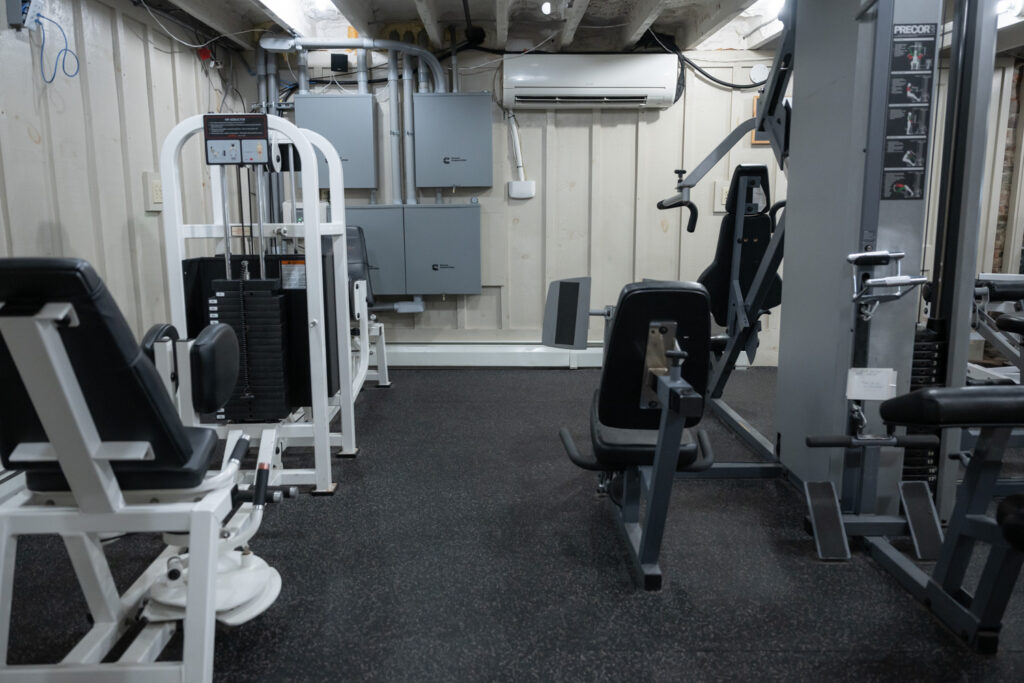
The shoulder press machine at the gym is where a lot of people first learn to press overhead, and for good reason. It holds the path of the weight for you, so you can build real overhead strength without worrying about balancing a barbell. But a machine only helps if your seat, grip, and range of motion are dialed in.
Here is how our coaches at Apex set clients up on the shoulder press machine, the muscles it builds, and the small mistakes that turn a great exercise into sore shoulders.
What muscles does the shoulder press machine work?
- Front and side delts, the muscles that build round, capped shoulders.
- Triceps, which lock out the press at the top.
- Upper chest and traps, as supporting players.
It is the safest way for a beginner to load the overhead press, because the machine keeps the weight moving in a straight line while you focus on pushing.
How to set up the shoulder press machine
- Adjust the seat height. Sit down and set the seat so the handles start at about shoulder or ear height, not up by your forehead. If you have to shrug to reach them, the seat is too low.
- Set your back flat against the pad. Brace your core so your lower back is not arching off the seat.
- Grip the handles. Most machines offer a neutral (palms facing each other) or overhand grip. Neutral is easier on the shoulders, so start there if your shoulders are cranky.
- Press up and slightly in. Drive the handles up until your arms are almost straight, stopping just short of locking out hard.
- Lower under control. Bring the handles back down until your elbows are roughly level with your shoulders, feel the stretch, then press again.
Common shoulder press machine mistakes
- Going too heavy. Shoulders respond to clean reps, not ego weight. If your form breaks or your low back arches, drop the pin.
- Stopping too high. Lower the handles until your elbows reach about shoulder level. A short range trains a short muscle.
- Flaring the elbows straight out. Keep them slightly forward, not pinned back in line with your ears, to protect the shoulder joint.
- Holding your breath. Exhale as you press up, breathe in as you lower. Bracing is good, turning purple is not.
Machine vs free-weight shoulder press
The machine is not better or worse than dumbbells, it is a different tool. The machine is safer to push close to failure and great for beginners or high-rep finishing sets. Free weights build more stabilizer strength and let each arm work on its own. Smart programs use both. If you are just starting out, the machine first, then graduate to dumbbells as your control improves. For a demonstration of the overhead press pattern, the ACE exercise library is a good free reference.
Anthony on machine versus free weight
To get strong you have to do free weights. You have to stabilize the weight, you have to use your core. You could be working the same muscle group and still train the body in a very different way.
Anthony Kukovica, owner and head coach at Apex Personal Fitness, coaching since 2013
Sets and reps by goal
- Building muscle: 3 to 4 sets of 8 to 12 reps.
- Building strength: 4 sets of 5 to 8 heavier reps.
- Beginner or finisher: 2 to 3 sets of 12 to 15 with lighter weight.
Train the pulling side of your body on the same principles. Balance all this pressing with back work like the lat pulldown machine and a few dumbbell back exercises so your shoulders stay healthy.
Frequently asked questions
Is the shoulder press machine good for beginners?
It is one of the best starting points. The fixed path means you can learn to press overhead and build strength without balancing free weights, which lowers the risk of getting hurt while you learn.
How low should I bring the shoulder press handles?
Lower until your elbows are about level with your shoulders. That gives your delts a full stretch without over-stressing the joint. Going lower than shoulder level on a machine is usually unnecessary.
Should I use a neutral or overhand grip?
If your shoulders bother you, use the neutral grip with palms facing each other, it is gentler on the joint. If they feel fine, the overhand grip hits the delts slightly more directly. Both build strong shoulders.
Want to press pain-free and actually see your shoulders grow? The coaches at Apex Personal Fitness will set the machine to your body and coach every rep. We are private, 24/7, and no-contract, serving Niagara Falls, Youngstown, and all of Niagara County. Book your free consultation and let us build your plan.
About the author
Anthony Kukovica is the owner and head trainer at Apex Personal Fitness, a private 24/7 gym serving Niagara Falls and Youngstown, NY. He coaches members one-on-one with structured, progressive programs built around their goals, and the setup cues and form fixes in this guide are the same ones he walks clients through in person. Apex is rated 4.7 stars in Niagara Falls and 5.0 stars in Youngstown on Google, with transparent pricing and no contracts.