
If you’re working out how to build muscle after 50, start with this: it works. What changes is the margin for error. You recover slower, so a week of pushing too hard costs you more than it did at 25, and you can’t out-work a program that isn’t structured.
Anthony Kukovica has coached at Apex Personal Fitness in Niagara County since 2013, across a client range that runs from people in their eighties working on mobility to competitive physique athletes. This is the structure he uses, what the timeline honestly looks like, and where most people over 50 get stuck.
Can You Still Build Muscle After 50?
Yes. Muscle responds to progressive resistance at any adult age. What declines is the speed of recovery between sessions and the hormonal support for growth, which means the training has to be more deliberate rather than harder.
The practical translation: fewer junk sets, more attention to the load going up over weeks, and a real rest day between sessions that hit the same muscle. Three quality sessions beat five rushed ones, and after 50 that stops being an opinion.
How to Build Muscle After 50: The Structure That Works
Three full body sessions a week, non consecutive days, built on compound movements with machine work filling the gaps. A squat or leg press pattern, a horizontal push, a horizontal pull, a vertical pull, and something for the core. That’s the whole skeleton.
Load selection is where people get it wrong in both directions. Too light and nothing adapts. Too heavy and your form breaks before the muscle is worked, which after 50 is how you end up sitting out a month. The target is a weight you can move well for 8 to 12 repetitions with two left in the tank, then adding to it when that gets comfortable.
On machines versus free weights
Machines are fantastic for isolating muscle groups where you don’t need to stabilize the weight. But to get strong you have to do free weights. You have to stabilize the weight, you have to use your core. You could be working the same muscle group and still train the body in a very different way. Never would I suggest somebody should do one or the other. Always incorporate both.
Anthony Kukovica, owner and head coach at Apex Personal Fitness, coaching since 2013
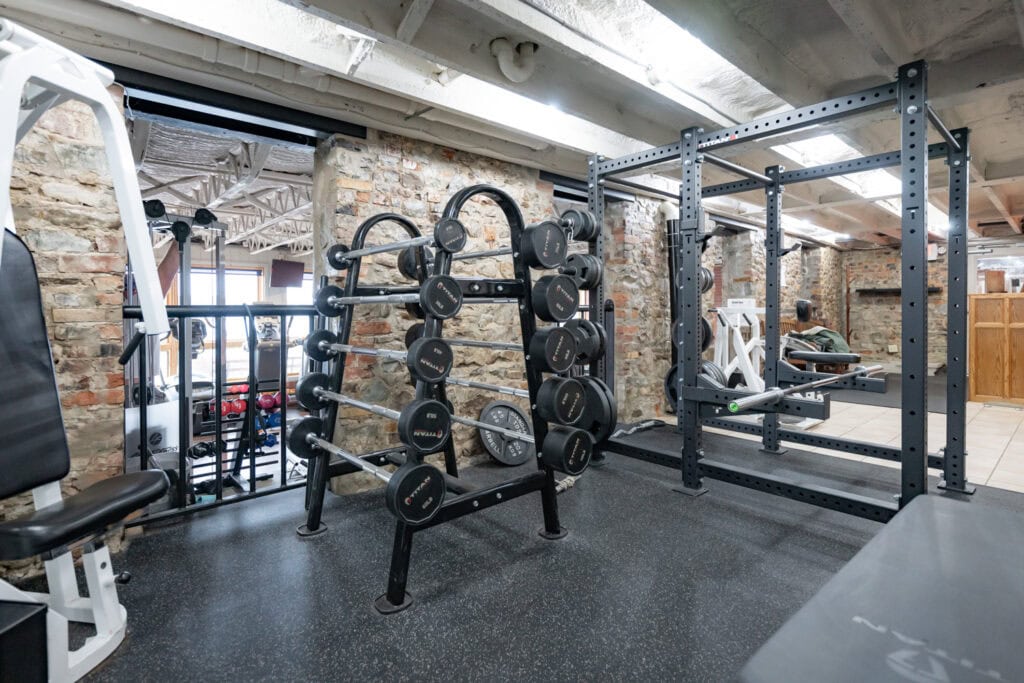
That matters more when you’re learning how to build muscle after 50, not less. Machines let you accumulate real work without the stabilizing demand, which is useful on a day when your balance or a cranky shoulder says no. Free weights are what keep you strong in the ways that show up outside the gym. Apex has both, including a squat rack and a power rack, so nothing forces the choice.
The Timeline, Honestly
Strength moves first and it moves fast, often inside three weeks, because early gains are largely your nervous system getting better at the movement. Visible muscle takes longer. Expect a few months before anybody else notices, and understand that the rate does not hold steady.
You see a big drop of water weight at the beginning. As each month progresses that amount of weight loss slows down, but you keep losing as long as you follow the program. It’s important that we tweak the numbers, change macros and calories, and rework routines about every six weeks.
Anthony Kukovica, owner and head coach at Apex Personal Fitness, coaching since 2013
The six week rework is the part worth stealing even if you never hire anybody. A program that was right in week one is not right in week ten, because you’re not the same trainee. Most people over 50 who stall have simply been running the same routine at the same weights since spring.
TRAIN ON YOUR SCHEDULE
Three sessions a week, any hour.
Membership is $45 a month and covers both gyms, 24/7. Try a day for $15 first.
Protein Is Where Most People Fall Short
Older adults generally need more protein than they think to hold onto muscle, and appetite often moves the wrong way with age. The common failure isn’t a bad training plan. It’s eating like someone who isn’t training.
Anthony’s approach when a client says they can’t eat that much is not to hand them a number and hope.
I taper them up. If I want them at two hundred grams and they’re at a hundred and twenty now, we increase slowly, week by week or every other week, so we get there in a reasonable amount of time without forcing them to jump right in.
Anthony Kukovica, owner and head coach at Apex Personal Fitness, coaching since 2013
Tapering is the difference between a target you hit and a target you abandon in week two. Nutrition guidance is built into training at Apex rather than sold as a separate program, so if you train with a coach the protein target comes with the plan.
Recovery Stops Being Optional
At 25 you can train badly and recover anyway. At 55 recovery is part of the program, and it’s mostly boring: a rest day between sessions that repeat a movement, sleep, and enough food.
Sleep needs are individual and worth taking seriously rather than optimizing to somebody else’s number. On the comfort side, the Niagara Falls gym has an infrared sauna with red light included with membership, which plenty of members use after a heavy session. Pleasant and useful, not a substitute for a rest day.
When Progress Stops
Plateaus arrive for everyone, and after 50 they arrive with more emotional weight because people read them as the ceiling.
Just because the plateau comes and weight loss or body fat slows down doesn’t mean they’re not seeing changes in other ways, whether it’s strength, functional ability, movement, more advanced exercises. You’re progressing in some way at all times.
Anthony Kukovica, owner and head coach at Apex Personal Fitness, coaching since 2013
Track more than one number. If the scale and the mirror have both stalled but your working weight on the leg press is up and you’re getting off the floor easier, the program is working. That’s the argument for logging sessions rather than relying on memory.
Common Questions
How many days a week should I lift after 50?
Three, on non consecutive days, is the sweet spot for most people. It gives every muscle two recovery days and still hits everything twice some weeks.
Do I need heavy weights?
You need progressively heavier weights, which is a different thing. Starting light and adding over months is both safer and more effective than starting heavy and stalling.
Should I check with my doctor first?
Yes, particularly with a heart condition, blood pressure, a joint replacement or osteoporosis. Apex trainers are not physical therapists or medical providers, so bring your doctor’s guidance and it gets written into the program instead of worked around.
Is it different for women?
The training principles are the same. The context often isn’t. There’s a separate piece on strength training for women over 40 that covers it properly.
Train at Apex. No crowds, no contracts.
Private 24/7 gyms in Niagara Falls and Youngstown, coaches on the floor 5am to 9pm. Membership is $45 a month. One on one coaching starts at $35 for 30 minutes, and there’s a specific approach for older clients.
Questions? Call 716-248-0250.
About the Author
Anthony Kukovica, NCSF Certified Personal Trainer, B.S. Health Sciences, Founder of Apex Personal Fitness
Anthony opened Apex on October 1, 2013 and has coached in Niagara County ever since. He programs across the full range, from clients in their eighties training for mobility to competitive physique athletes. Apex has two locations, 2416 Military Rd in Niagara Falls and 445 Main St in Youngstown.